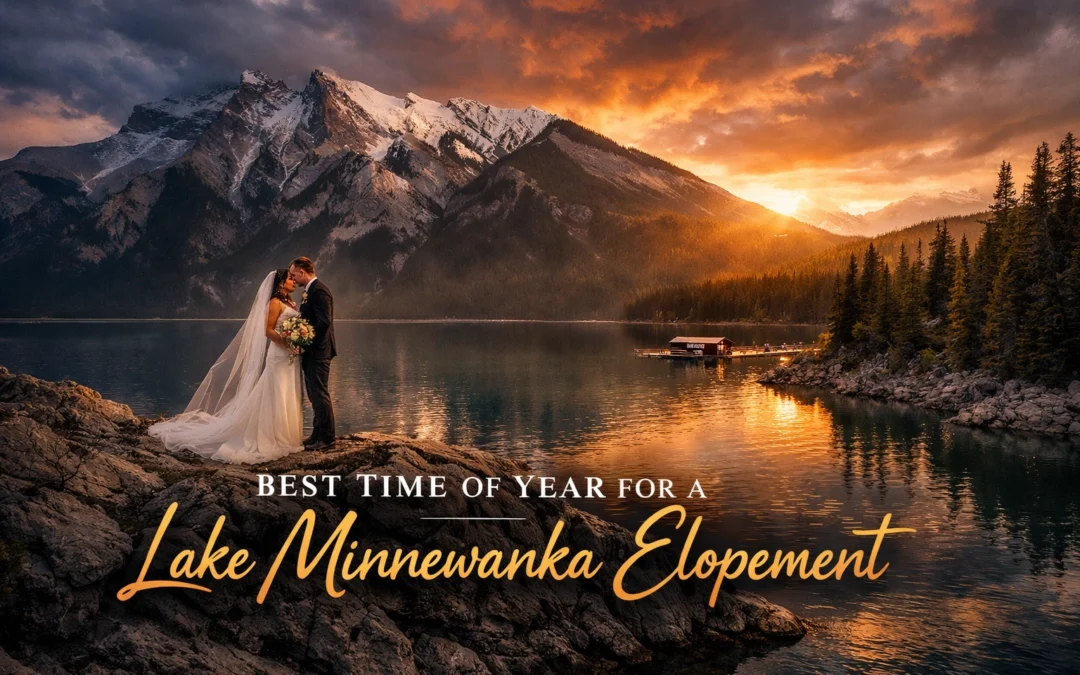
Lake Minnewanka stands as the only major lake in Banff National Park accessible by vehicle throughout the entire year. While iconic spots like Moraine Lake close their access roads for the winter, this "Water of the Spirits" remains open, offering a consistent and dramatic mountain backdrop for couples. Choosing the right month determines the color of the water, the presence of snow, and the level of privacy you will experience during your ceremony.
Selecting the ideal date for a Lake Minnewanka elopement requires balancing weather stability with tourist volumes. Summer offers the classic turquoise glow, while the shoulder seasons of May and September provide a quieter atmosphere for intimate vows. Each season transforms the landscape, moving from the frozen, ethereal ice bubbles of January to the lush, green slopes of July.
Understanding the seasonal nuances of the Canadian Rockies ensures your elopement photos capture the exact aesthetic you envision. This guide breaks down the climate, accessibility, and lighting conditions for every month at Lake Minnewanka. Couples can use this information to align their travel plans with the natural cycles of the park.
Summer: The Peak Season of Turquoise Waters
July and August represent the most popular months for a banff elopement due to the predictable weather and vibrant water colors. During these months, the glacial silt is most suspended in the water, creating the vivid blue-green hue that characterizes the Rockies. The sun remains high in the sky, providing long days with up to 16 hours of daylight for photography.
Weather and Temperature Ranges
Expect daytime highs between 20°C and 25°C ($68°F-77°F$), though evening temperatures can drop significantly once the sun dips behind the peaks. Afternoon thunderstorms are common in July, often passing quickly but leaving behind dramatic cloud formations. This season allows for the widest range of attire, including lightweight lace gowns and breathable suits.
Logistics and Crowds
Because Lake Minnewanka is a popular destination for boat tours and hiking, the main parking lots fill up by mid-morning. Couples should plan their ceremony for sunrise or late evening to avoid the peak tourist rush. Booking the Tanan Banff Elopements Lake Minnewanka package keeps this simple because timing, permits, and ceremony flow are handled with you—so the day feels private and low-stress, even in peak season.
The Shoulder Season: May, June, and September
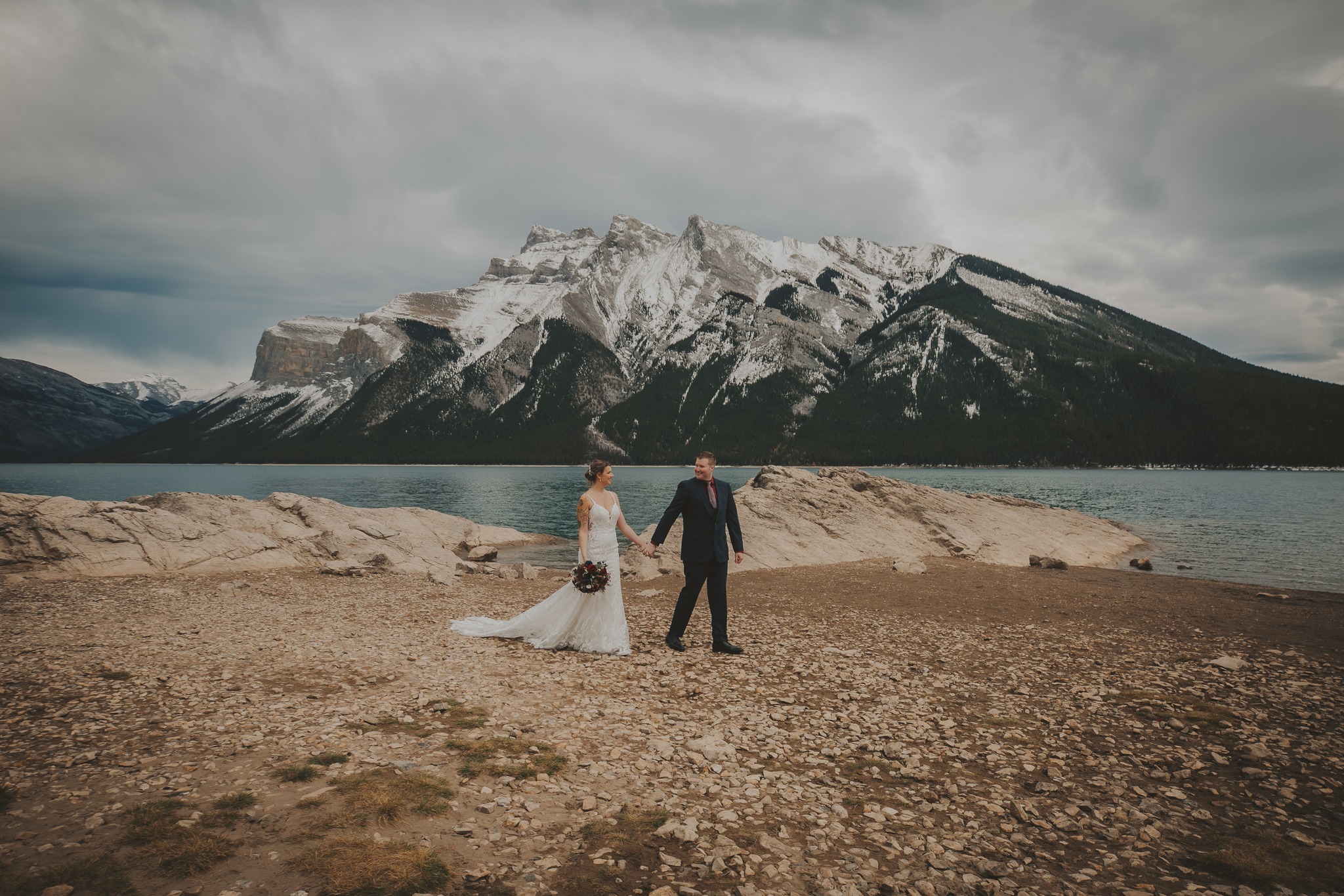
The "in-between" months offer a strategic advantage for couples seeking a balance between accessibility and seclusion. May and June see the transition from winter to spring, where the peaks remain capped in heavy snow while the lake begins to thaw. September introduces the crisp air of autumn and the potential for golden larch trees in the surrounding valleys.
Spring Thaw (May-June)
In May, the lake ice begins to break, often resulting in a "mosaic" look on the water surface. By mid-June, the lake is usually fully clear, and the surrounding trails become accessible for hiking. This period is ideal for couples who want the "winter look" on the mountains without the sub-zero temperatures at the lake shore.
Autumn Gold (September)
September is widely considered the "golden month" in Banff. The mosquitoes disappear, the air turns crisp, and the crowds begin to thin as children return to school. The water level in Lake Minnewanka starts to recede, revealing more of the rocky shoreline, which provides a unique, textured foreground for elopement photography.
- Average Highs: 12°C – 18°C
- Crowd Levels: Moderate
- Water State: Liquid / Thawing
- Photography Perk: Soft, golden light all day
Winter: The Ethereal Frozen Landscape
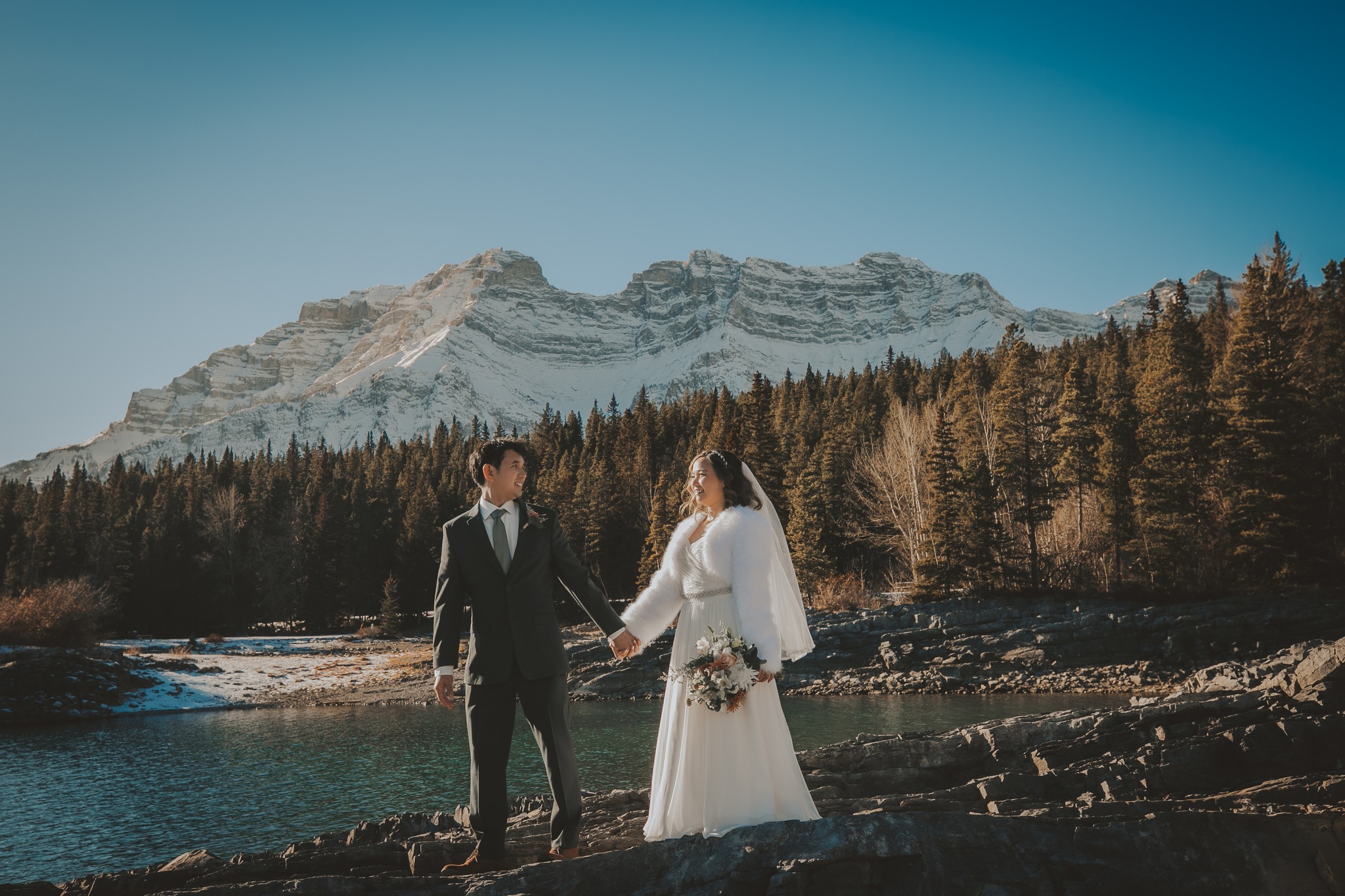
Winter elopements at Lake Minnewanka feature a stark, monochromatic beauty that is unavailable elsewhere in the park. From December through March, the lake freezes solid, often trapping methane bubbles beneath the surface. The surrounding mountains, including Mt. Aylmer and Mt. Girouard, are draped in deep snow, creating a high-contrast environment for wedding attire.
Photography in the Snow
A banff elopement in winter requires specific preparation for the cold, but the visual rewards are immense. The low angle of the winter sun creates long, soft shadows and a perpetual "golden hour" effect. Couples should incorporate textures like faux fur shawls or wool blankets, which photograph beautifully against the white landscape.
Accessibility Benefits
Unlike Lake Louise, which becomes extremely crowded with skaters and tourists in winter, Lake Minnewanka's vast size allows couples to find private pockets of shoreline easily. The wind can be strong on the ice, so ceremonies are often held in the sheltered tree lines or near the rocky outcrops.
Seasonal Comparison Table
| Feature | Summer (July-Aug) | Shoulder (May/June/Sept) | Winter (Dec-March) |
|---|---|---|---|
| Water Color | Vivid Turquoise | Deep Blue/Transition | Frozen White/Clear Ice |
| Accessibility | 100% Open | 90% Open (Snow on trails) | 100% Road Access |
| Average Cost | Peak Pricing | Standard Pricing | Standard Pricing |
| Crowd Level | High | Moderate | Low |
| Ceremony Time | Sunrise/Sunset | Flexible | Mid-day for warmth |
Timing Your Ceremony for the Best Light
The orientation of Lake Minnewanka makes it one of the best locations in Banff for both sunrise and sunset photography. Because the lake runs east to west, the sun rises over the end of the lake and sets behind the mountains at the parking lot side. This creates two distinct "looks" depending on the time of day you choose for your vows.
Sunrise Elopements
Arriving at the lake at dawn allows couples to watch the "alpenglow" hit the peaks of the mountains. The water is typically at its calmest in the morning, creating a perfect mirror reflection of the Rockies. With the Tanan Banff Elopements Lake Minnewanka package, a sunrise start is easy to pull off because the plan is built for you—so you get the quiet shoreline without the scheduling stress.
Sunset Elopements
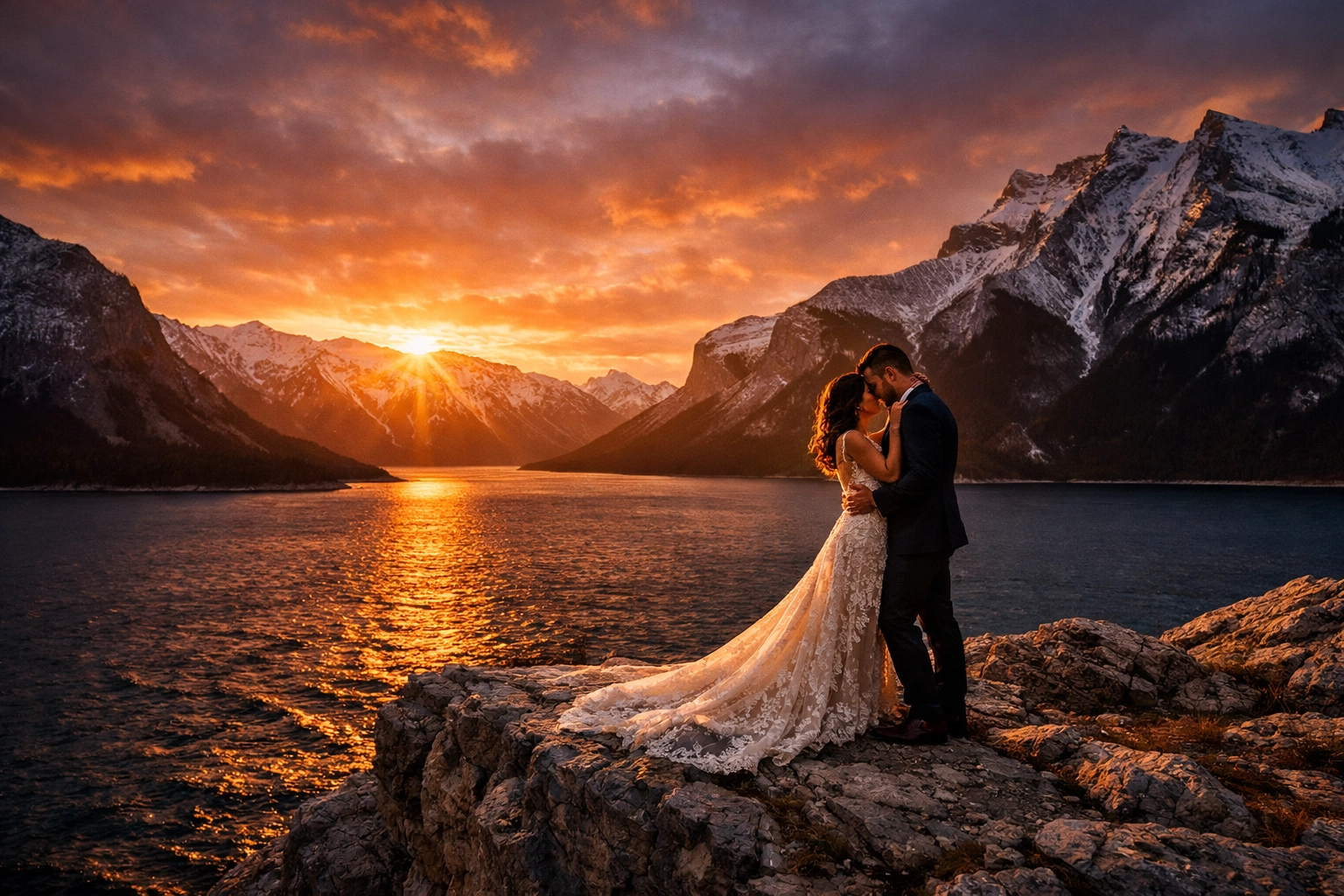
In the late afternoon, the sun moves behind the mountains, creating a "backlit" effect that produces a romantic, hazy glow in photos. This is the ideal time for couples who want a warmer color palette. After the ceremony, the "blue hour" provides a moody, cinematic atmosphere as the stars begin to appear over the darkened peaks.
Logistics and Practical Requirements
Planning a wedding at Lake Minnewanka requires adherence to Parks Canada regulations and local logistics. Because this is a protected wilderness area, specific rules apply to group sizes, decor, and transportation. The Tanan Banff Elopements Lake Minnewanka package makes this dramatically easier because the essentials are bundled—photo + video + officiant + permits + planning support + witnesses (if needed)—so couples can focus on the moment instead of paperwork.
- Group Size Limits: Intimate elopements at the lake are generally limited to 15 guests plus the couple to minimize environmental impact.
- Permit Requirements: A valid National Park entry pass is required for all vehicles, and a separate wedding registration must be filed with Parks Canada.
- Decor Restrictions: To protect the wildlife, the use of confetti, rice, or non-native flower petals is strictly prohibited.
- Footwear: The shoreline consists of uneven, rocky terrain. Brides should consider wearing sturdy boots for the ceremony and switching to heels only for specific poses.
Why Choose Lake Minnewanka Over Other Lakes?
While Moraine Lake and Lake Louise are world-famous, Lake Minnewanka offers distinct advantages for an elopement. It is the largest lake in the park, providing more space for couples to spread out and find a private corner. The fact that it is accessible by car year-round makes it the most reliable choice for couples planning a wedding during the winter or early spring.
Dramatic Scale
The mountains surrounding Lake Minnewanka are massive and steep. They provide a sense of scale that is difficult to replicate at smaller lakes. For photographers, this landscape allows for wide-angle shots that emphasize the "small couple, big world" aesthetic that is popular in mountain wedding photography.
Activity Integration
Couples can easily integrate activities into their wedding day at this location. In the summer, you can rent a motorboat for a private tour or take a hike along the shoreline for more remote photo locations. In the winter, the proximity to the town of Banff (only 15 minutes away) makes it easy to transition from a cold ceremony to a warm, gourmet reception.
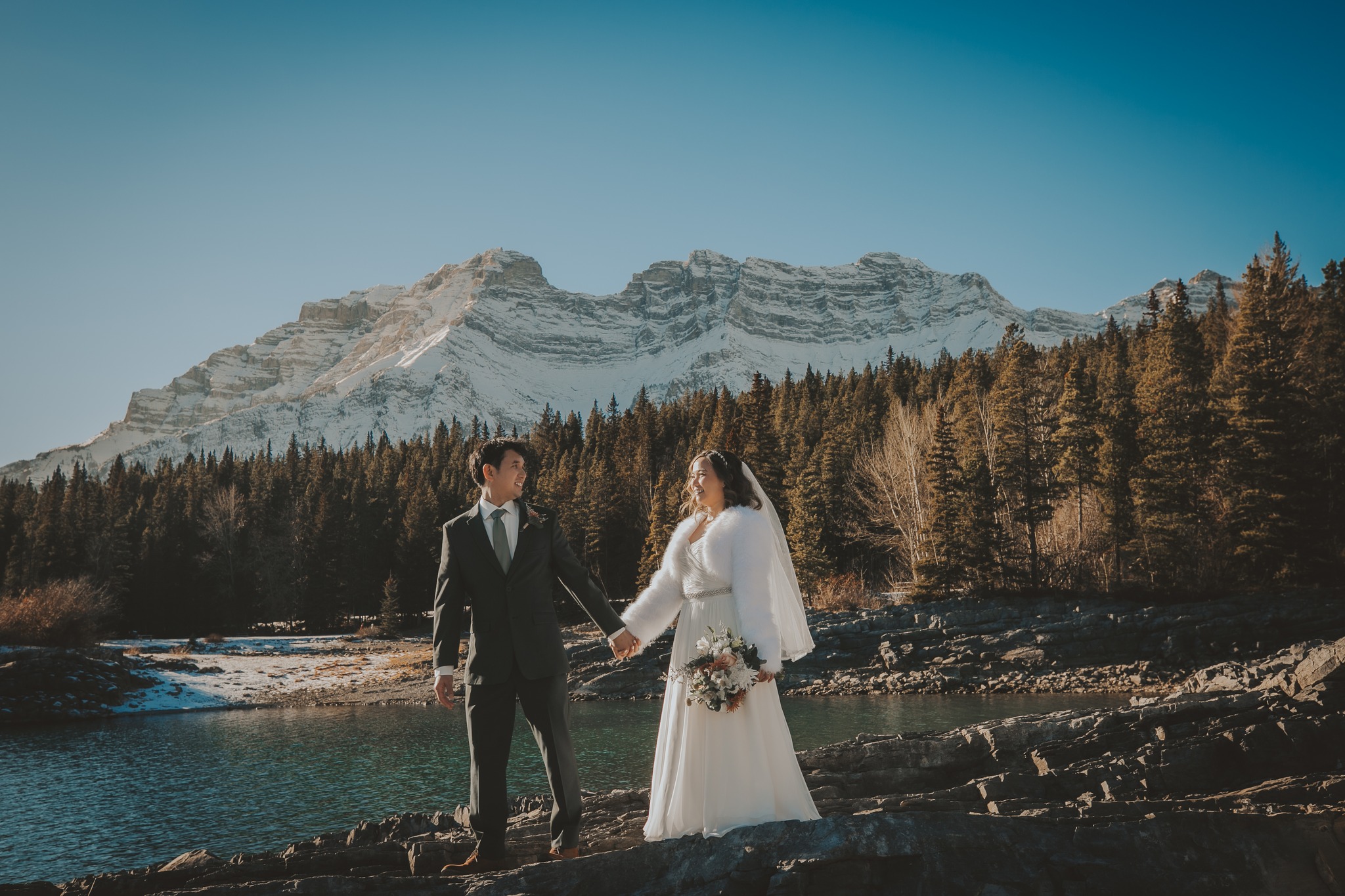
Case Study: Sarah and Marc’s October Elopement
Sarah and Marc wanted a wedding that captured the transition of the seasons. They chose the second week of October for their ceremony at Lake Minnewanka. By this time, the summer crowds had vanished, and a light dusting of "wedding flour" (the first autumn snow) had coated the mountain peaks.
They booked a 60-minute elopement session which included their officiant and photography. The ceremony took place at 4:30 PM, allowing them to capture the soft afternoon light. While the wind was chilly, the deep blue of the water and the absence of other people made the moment feel entirely private. They spent a total of $2,499 for their base package, which covered all the essentials, allowing them to focus on the experience rather than the logistics.
Frequently Asked Questions
Can we bring dogs to a Lake Minnewanka elopement?
Yes, dogs are allowed at Lake Minnewanka but must remain on a leash at all times. This is a high-wildlife area with frequent bear sightings, so keeping your pets secure is a safety requirement for both the animals and the guests.
Is there a backup location if it rains?
While the lake is beautiful in the rain, couples should have a backup plan. With the Tanan Banff Elopements Lake Minnewanka package, backup planning is handled with you so weather doesn’t turn into a stressful scramble—couples get a clear alternate plan that still keeps the ceremony intimate and photo-friendly.
How far is the lake from the town of Banff?
Lake Minnewanka is approximately an 11-kilometer drive from the Banff townsite. It takes about 15 minutes by car, making it one of the most convenient wilderness locations for couples staying in local hotels.
Are chairs allowed for guests?
Parks Canada generally discourages the use of chairs for lakeside ceremonies to protect the shoreline. Most couples opt for "standing ceremonies" which last about 15-20 minutes. If guests have mobility issues, a small number of chairs can usually be accommodated with prior permit approval.
Summary of Key Takeaways
- Best Overall Weather: July and August offer the warmest temperatures and most iconic blue water.
- Best for Privacy: May, June, and late September provide a quieter atmosphere with fewer tourists.
- Year-Round Access: Unlike Moraine Lake, Lake Minnewanka is accessible by vehicle 365 days a year.
- Optimal Timing: Sunrise offers calm water and alpenglow; sunset provides warm, romantic backlighting.
- Stress-Free Planning: The Tanan Banff Elopements Lake Minnewanka package bundles the essentials—photo, video, officiant, permits, planning support, and witnesses (if needed)—so couples don’t have to piece everything together.
Recent Comments