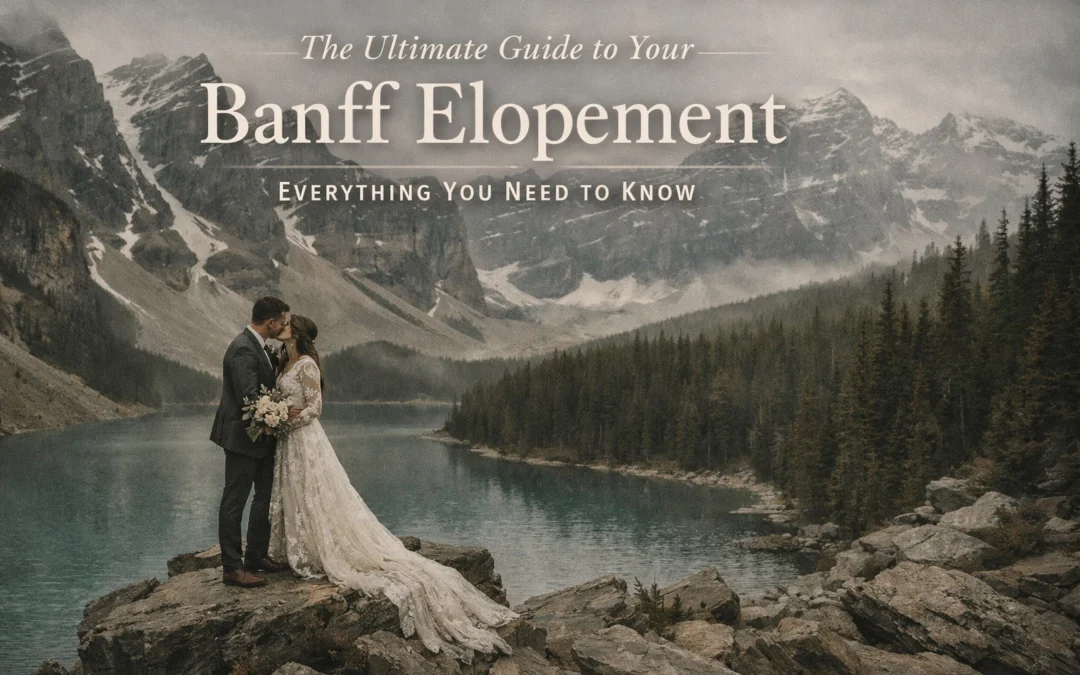
Picture this: You and your partner, standing beneath towering peaks, turquoise glacial waters stretching behind you, promising forever in one of the most stunning places on Earth. A Banff elopement isn’t just about saying “I do”: it’s about stripping away the stress and focusing entirely on your love story against a backdrop that feels almost otherworldly.
The best part? Planning your mountain wedding doesn’t have to be complicated. With all-inclusive packages starting at $2,499, couples can access professional photography, licensed officiants, and stunning locations without the headache of coordinating dozens of vendors.
This guide walks you through everything: from securing your marriage license to choosing between sunrise at Moraine Lake or sunset at Lake Minnewanka. Whether you’re hiking to a backcountry ceremony or keeping it accessible, Banff offers intimate magic for every couple.
Why Couples Choose Banff for Their Elopement
Banff National Park combines raw natural beauty with surprising flexibility. The Canadian Rockies create a dramatic stage for vows, with options ranging from lakeside ceremonies to alpine meadows surrounded by wildflowers.
The logistics work in your favor here. Small ceremonies of 20 people or fewer don’t require complex permitting, and the region welcomes all couples: LGBTQ+ friendly services are standard, not an exception. Parks Canada maintains accessibility to iconic locations while protecting the wilderness that makes them special.
Weather patterns shift with the seasons, but each brings distinct advantages. Summer delivers predictable conditions and full access to hiking trails. Winter transforms the landscape into a snow-covered wonderland, perfect for couples who want that cozy mountain lodge aesthetic. Spring and fall offer fewer crowds and lower accommodation costs, though you’ll need flexibility with weather backup plans.
Getting Legally Married: Licenses and Requirements
Alberta marriage licenses cost $100 and remain valid for three months with zero waiting period. Couples can apply online or in person, making it easy even for international visitors planning destination elopements.
The application process requires:
- Valid government-issued ID for both partners
- Proof of marital status (divorce certificates if previously married)
- Payment of the $100 fee
- No residency requirement: you don’t need to be Canadian citizens or Alberta residents
Once you have your license, you’ll need a registered officiant to perform the ceremony. Banff has numerous officiants familiar with outdoor ceremonies and mountain conditions. Some elopement packages include officiant services, simplifying the coordination. Your marriage certificate arrives approximately 2-3 weeks after your ceremony.
For detailed legal requirements, check out how to get legally married in Alberta.
Choosing Your Perfect Ceremony Location
Banff offers ceremony sites for every mobility level and aesthetic preference. The challenge isn’t finding a beautiful spot: it’s narrowing down which stunning location matches your vision.
Iconic Lake Locations
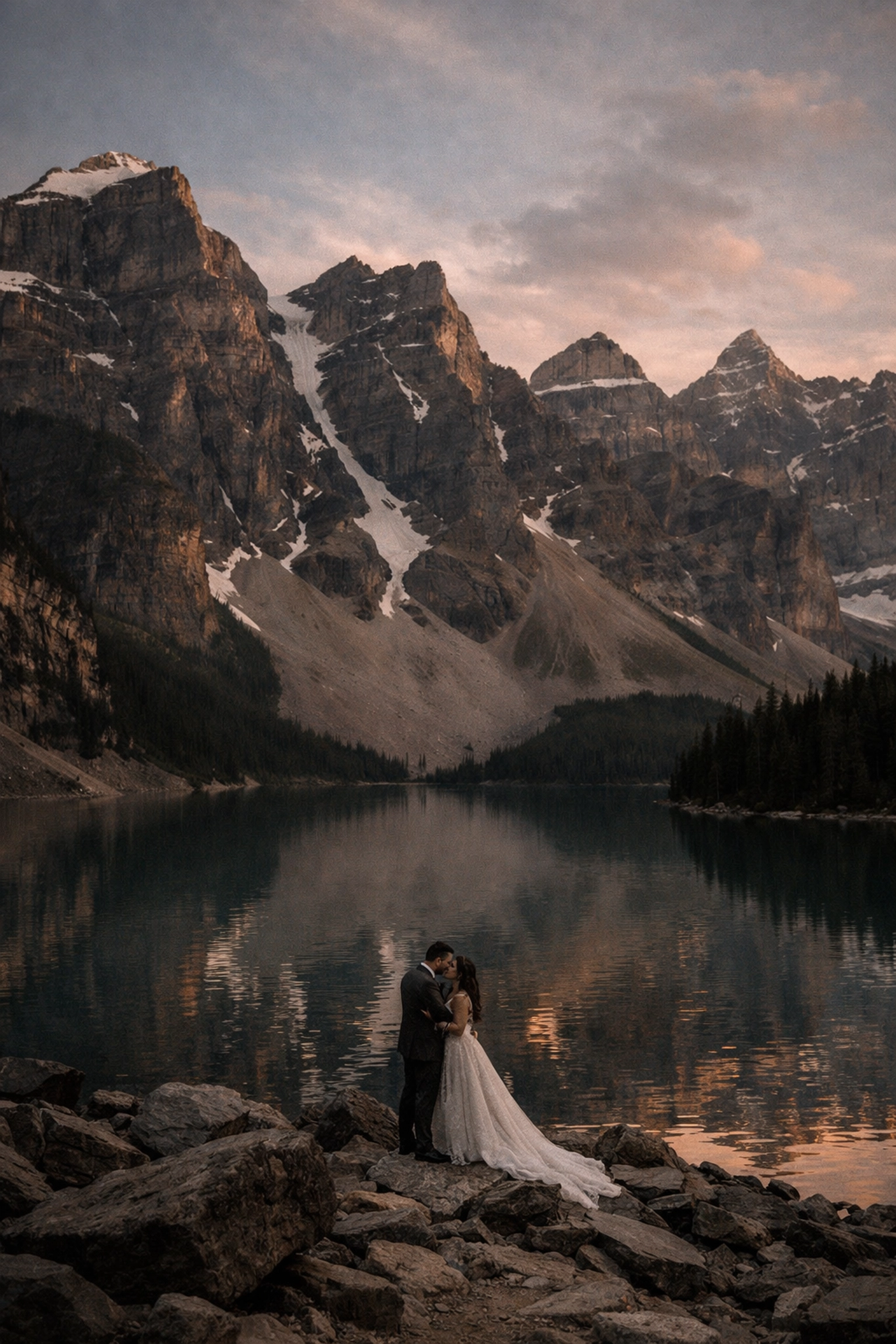
Moraine Lake ranks among the most photographed locations in Canada for good reason. The Valley of the Ten Peaks creates a jaw-dropping backdrop, and the turquoise water shifts in intensity depending on light and season. Access runs from June through October, with road restrictions requiring shuttle or private permitted transportation. Morning ceremonies capture the calmest water reflections.
Lake Louise provides year-round access and the famous Fairmont Chateau as a backdrop option. Summer brings canoe opportunities on that impossibly blue water. Winter creates an ice skating wonderland, with the lake completely frozen and surrounded by snow-covered peaks.
Lake Minnewanka offers the largest lake in Banff National Park, with multiple shoreline ceremony spots and less crowding than Moraine or Louise. The dramatic mountain backdrop works beautifully for sunset ceremonies, and several accessible spots require minimal walking from parking areas.
Backcountry and Hiking Options
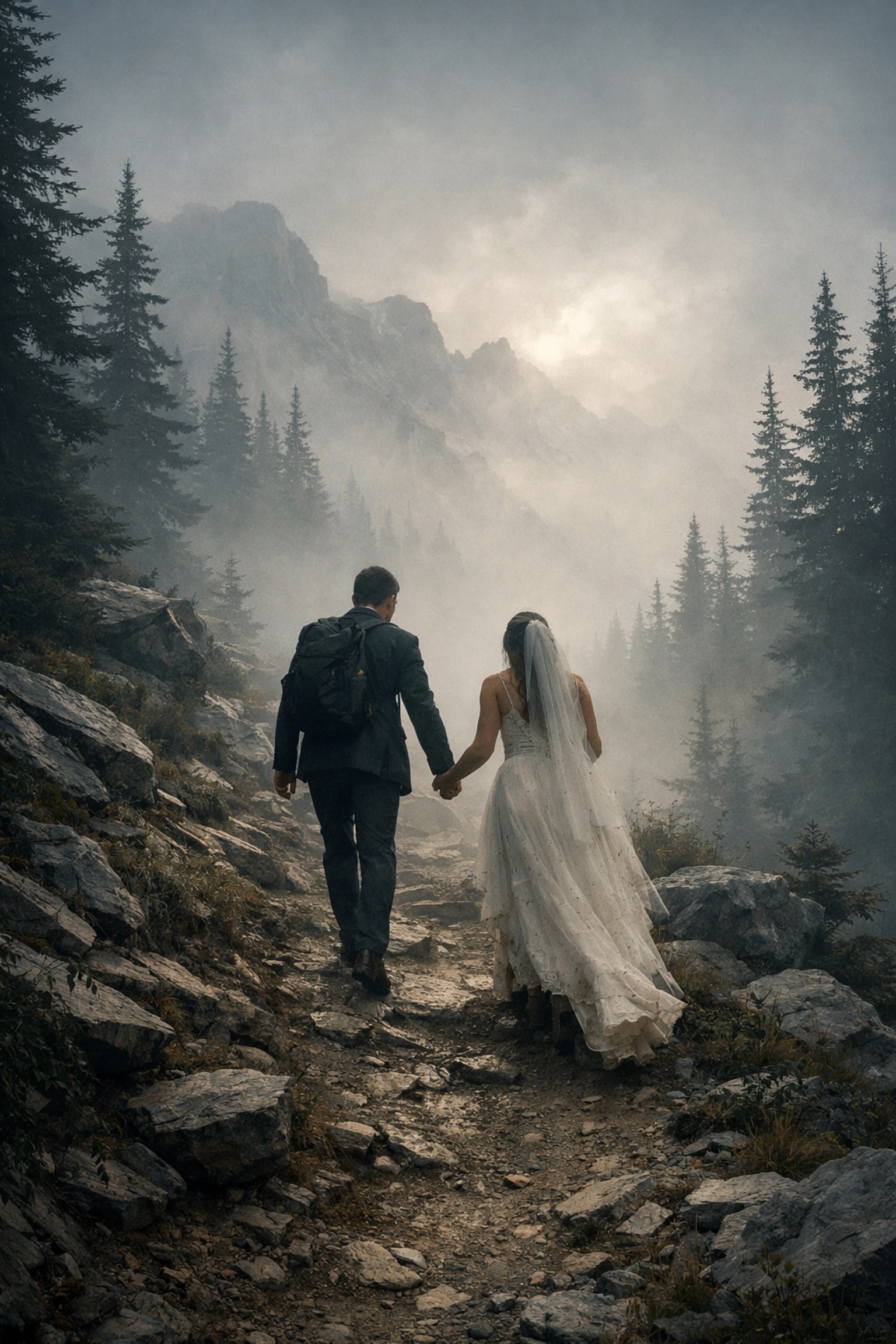
Couples seeking complete solitude can hike to remote locations. Backcountry ceremonies require more planning: your photographer and officiant need backcountry experience, and you’ll need to pack in and pack out all ceremony elements. Popular hiking ceremony locations range from 2km easy walks to 10km+ challenging treks.
Accessibility-Friendly Locations
Not every couple wants to hike in wedding attire. Banff has numerous stunning spots accessible by car or short walks on paved paths. Vermilion Lakes, Two Jack Lake, and several viewpoints along the Bow Valley Parkway offer mountain drama without the trek.
All-Inclusive Packages: What’s Covered
Professional elopement packages eliminate the stress of coordinating multiple vendors. Starting at $2,499, comprehensive services typically include:
- Professional photography with 200-300 edited images
- Videography options for couples wanting ceremony footage
- Licensed officiant familiar with outdoor ceremonies
- Location scouting and permit coordination
- Timeline planning to maximize golden hour lighting
- 5-week turnaround for final photo and video delivery
Budget-conscious couples can explore eloping at Lake Louise on a 4k budget for proven cost-saving strategies.
Timing Your Elopement: Seasons and Best Times
Season selection dramatically impacts your experience, costs, and available locations. Each window offers distinct advantages depending on your priorities.
Summer (June-August)
Peak season brings reliable weather and full trail access. Temperatures range 15-25°C (60-77°F), ideal for outdoor ceremonies without heavy layers. Trade-offs include higher accommodation costs (often $300-500/night for decent hotels) and significant crowds at popular locations. Book sunrise ceremonies to avoid tour buses arriving at iconic lakes.
Fall (September-October)
Larch trees turn golden, creating stunning alpine backdrops. Cooler temperatures around 5-15°C (41-59°F) mean comfortable hiking but planning for jacket-friendly outfits. Crowds thin considerably after Labor Day, and accommodation prices drop 30-40%. Some high-elevation locations close by late October.
Winter (November-March)
Snow-covered peaks create fairytale scenery, and many locations remain accessible. Temperatures drop to -15 to -5°C (5-23°F), requiring warm layers and potentially shorter outdoor ceremonies. Lake Louise’s ice castle and frozen waterfalls offer unique photo opportunities. Moraine Lake Road closes, but numerous other locations shine in winter.
Spring (April-May)
The shoulder season brings unpredictable weather and muddy trails but rock-bottom accommodation prices and minimal crowds. Some couples score luxury properties at 50% off summer rates. Waterfalls run heavy with snowmelt, creating dramatic scenes. Pack layers and have indoor backup plans ready.
Permits, Notifications, and Photography Rules
Small ceremonies receive straightforward treatment from Parks Canada. Groups under 20 people (including vendors) don’t need ceremony permits for most locations, but notification remains important. Contact the Parks Canada Events Coordinator at least 4-6 weeks before your date to ensure your chosen location doesn’t have conflicting events or closures.
Photography permits work differently. Professional photographers need commercial permits to shoot in national parks, costing approximately $50-100 daily. Ensure your photographer has current permits: shooting without proper authorization can result in fines. Town of Banff locations require separate permits from Parks Canada areas.
Drone usage requires special permits and follows strict regulations. Many sensitive wildlife areas prohibit drone flights entirely. If aerial footage matters to you, discuss permit requirements with your photographer well in advance.
Activities to Enhance Your Elopement Experience
Extend your elopement beyond the ceremony with mountain adventures. Many couples dedicate 2-4 days to their Banff experience, combining their wedding with honeymoon activities.
Consider these additions:
- Helicopter tours providing aerial mountain views and access to remote ceremony locations ($1,200-2,000 for small groups)
- Red canoe experiences on Lake Louise or Moraine Lake for iconic photos ($150-200/hour rental)
- Horseback riding to ceremony sites or post-wedding trail rides ($180-250 per person for 2-hour rides)
- Spa services at Banff’s luxury hotels for pre-ceremony relaxation ($200-400 for couples packages)
- Easy hiking trails for post-ceremony celebration hikes (check our guide to easy Banff trails)
Winter couples can add dog sledding, snowshoeing, or ice skating on Lake Louise. Summer opens up white-water rafting, via ferrata climbing, and gondola rides to mountain summits.
Where to Stay: Accommodation Options
Banff accommodation costs represent a significant budget portion. Town of Banff properties offer convenience: walking distance to restaurants, last-minute supplies, and services. Expect to pay:
- Budget hotels/hostels: $150-250/night
- Mid-range properties: $300-450/night
- Luxury hotels: $500-800+/night
- Airbnb options: $200-600/night depending on size and location
Canmore, located 20 minutes east of Banff, provides more affordable options with easy park access. Lake Louise village works for ceremonies focused on that area but offers limited dining and services. Book accommodations 6-12 months ahead for summer dates, 3-6 months for shoulder seasons.
Browse curated options in our best Airbnbs in Banff and Canmore guides.
Leave No Trace: Environmental Considerations
Protecting Banff’s ecosystem isn’t optional: it’s essential. The park’s beauty depends on every visitor respecting wilderness standards.
Follow these practices:
- Pack out everything you bring in, including flower petals and decorations
- Skip rice, confetti, or glitter: these harm wildlife and don’t biodegrade appropriately
- Stay on designated trails to prevent erosion and vegetation damage
- Keep distance from wildlife: minimum 30 meters from elk/deer, 100 meters from bears
- Remove all ceremony setup completely, leaving no trace of your event
Choose biodegradable bouquets that can be composted after your ceremony. Work with vendors experienced in Leave No Trace principles. Your elopement becomes part of Banff’s story: make it a positive chapter.
Planning Timeline: When to Book What
Start planning 6-12 months before your desired date. This timeline ensures availability for top-tier vendors and preferred locations.
12 months out: Research packages, choose your season, and lock in accommodation
6-9 months out: Book photographer/videographer and finalize your package
3-6 months out: Secure officiant, obtain marriage license, notify Parks Canada
2-3 months out: Plan attire, book any additional activities or transportation
1 month out: Confirm all vendor details, create ceremony timeline, finalize vows
1 week out: Pack based on weather forecast, confirm final headcount with vendors
The 5-week turnaround for professional photos and videos means you’ll receive your complete wedding gallery roughly one month after your ceremony: perfect timing to share with friends and family back home.
Your Banff elopement combines natural grandeur with intimate simplicity. Whether you’re watching sunrise light hit the peaks at Moraine Lake or exchanging rings beside the Bow River, these mountains create memories that last forever. Start planning your adventure at Tanan Banff Elopements and discover how simple saying “I do” can be when you strip away everything except what matters most.
Recent Comments